|
Sathyanarayana, S, C Karr, P Lozano, E Brown, AM Calafat, F Liu, and SH Swan. 2008. Baby Care Products: Possible Sources of Infant Phthalate Exposure. Pediatrics 121:e260-e268. |
|
|
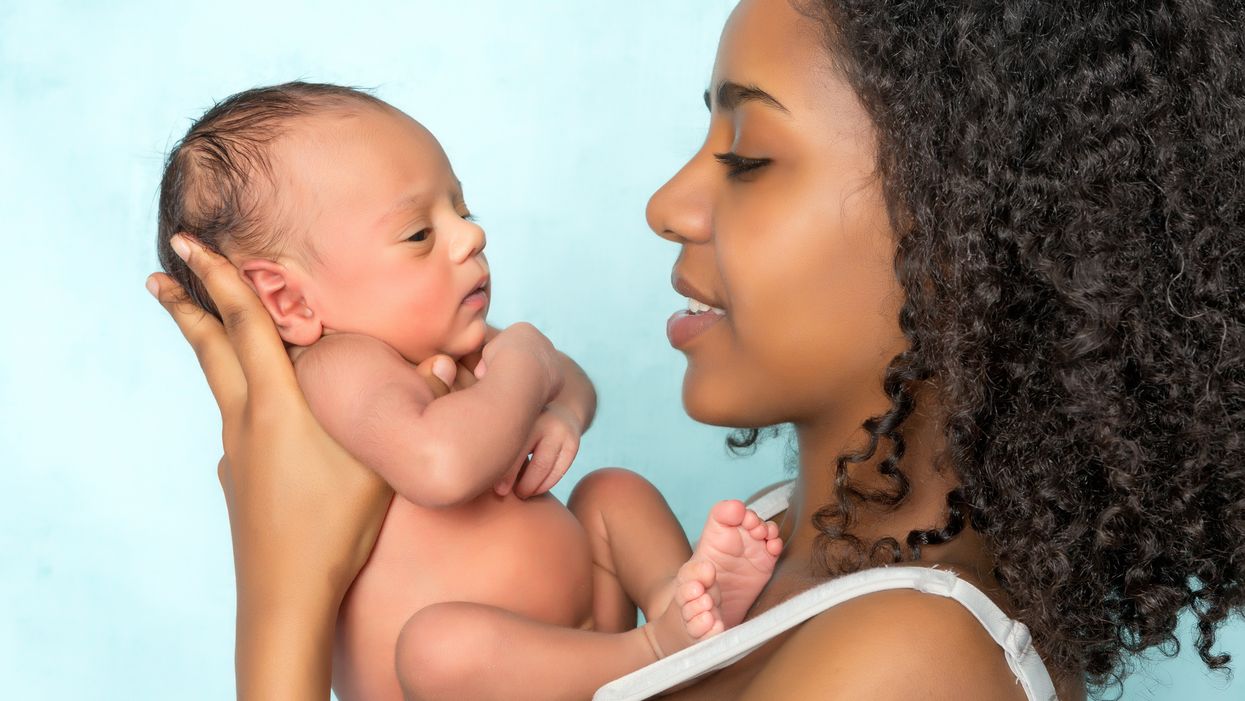
Phthalate exposure is widespread in infants and use of baby care products appears to be contributing, according to an analysis of babies' urine. Greater use of lotions, powders and shampoos were associated with higher phthalate levels. The associations were strongest in younger infants.
The scientists who conducted the study recommend that parents wanting to decrease phthalate exposures for their infants should reduce the use of baby products unless needed for medical purposes.
The US does not require product labels to indicate phthalate content. |
|
Many baby care products use fragrances, which can contain phthalates. The products above have not been tested. |
|
Context: Phthalates are a family of chemicals added to many consumer products to alter the chemical characteristics of the product. Animal studies show phthalates can affect development and cause harm to the reproductive system. Research with people has also revealed associations between phthalate exposures and adverse health conditions, including sperm damage and altered sex organ development. Recent research with animals has discovered that at least one phthalate, DEHP, increases immune system sensitivity at extremely low levels of exposure.
Phthalates are used widely in personal care products, but manufacturers are not required to reveal product composition. Studies of adults have found that higher use of personal care products is tied to higher phthalate levels measured in urine. No information, however has been available about the use of infant care products and phthalate exposures, even though the animal studies strongly indicate that early stages of life are most vulnerable.
Because phthalate contamination is so ubiquitous, researchers focus their measurements on the metabolites to which phthalates are converted once absorbed. This eliminates potentially confounding contamination. |
|
What did they do? Sathyanarayana et al. collected urine from wet diapers and used a questionnaire to obtain information about infant care product use during the baby's last 24 hours. Products were divided into 5 categories: infant powder/talc/cornstarch, Desitin/diaper creams, infant wipes, infant shampoo, and infant lotion. They also obtained information about toy use, because two phthalates are used commonly in plastic toys.
After squeezing urine from the diapers, the research team sent the samples to the US Centers for Disease Control for chemical analysis. CDC chemists determined the concentrations of 9 different phthalate metabolites in each of the samples.
| These metabolites are produced when phthalates are absorbed into the body and converted chemically by enzymes into other chemicals.The 9 metabolites stem from 7 phthalates which are known to be added to personal care products. |
|
 |
For full chemical names
The babies included in the study had been part of research by the Study for Future Families (SFF), a project working simultaneously in Missouri, California and Minnesota to help understand the role of fetal and early life exposures in affecting health. Mothers who had already participated in SFF were invited to bring their infants back to a clinic if the babies were between 2 and 25 months of age and they lived within 50 miles of the clinic. Of the 347 who returned to the clinic for an additional visit, information and urine samples were obtained from 163.
| What did they find? All babies had detectable levels of at least one phthalate metabolite in their urine. Indeed, over 80% of infants had at least 7 (graph to right). Four metabolites (MEP, MBP, MBzP and MEOHP occurred in over 90% of babies sampled. The least frequently detected were MEHP and MMP (in 76% and 66% of samples, respectively). |
|
 |
|
Levels of different phthalates ranged widely among samples. Average levels were highest for MEP (178 µg/L) and lowest for MMP (4.4 µg/L). Five averaged above 30 µg/L (MEP, MBP, MBzP, MEOHP and MEHHP with 178, 37, 31, 41 and 61 µg/L, respectively). The highest levels observed were for MEP, MEOHP and MEHHP (4481, 1888 and 3167 µg/L, respectively).
Ninety-four percent of mothers reported they had used infant wipes within the last 24 hours, and 54% had used infant shampoo. Reported use of baby lotion, desitin/diaper cream and baby powder were 36%, 33% and 14%, respectively.
When Sathyanarayana et al. examined the relationship between infant care product use and individual phthalate levels in urine, they found four statistically significant associations. Levels of MEP and MMP were higher if the mother reported using baby lotion; MMP was higher following use of baby shampoo and MiBP was higher following baby powder use.
Stronger associations merged when they looked at mixtures of the 3 phthalates that had shown significant individual associations, MEP, MMP and MiBP, especially in infants 8 months old or younger. To explore this, they created an index of exposure that combined the three phthalates together. The value of this index averaged over 5 times higher for infants 8 months old or younger if the mother reported she had used baby lotion within the past 24 hours. Use of baby powder and baby shampoo also showed strongly significant associations with higher mixture scores, whereas use of desitin/diaper creme and baby wipes did not.
Mixture scores also rose significantly in babies whose mothers reported using more products (graph to right). |
|
 |
No relationships were observed between toy use and phthalate levels.
What does it mean? These results indicate that increased use of baby care products leads to increased exposure to phthalates. Their results don't identify which brands contain phthalates and which don't. Current law does not require that phthalates be listed as an ingredient. DEP is commonly added to fragrances, which are often used in baby care products. MEP, a DEP metabolite, had the highest average concentration of all of the metabolites measured. One individual had exceedling high levels (approximately 4 parts per million).
Although animal studies definitively establish several phthalates as developmental consequences, the health consequences of the exposures reported by Sathyanarayana et al. are not understood, for several reasons.
- The animal studies used to assess toxicity work at relatively high doses compared to what humans typically experience. Until recently, it has been assumed that high dose experiments are useful predictors of what low dose exposures can cause. This assumption is the basis for the way that regulatory toxicology is conducted: expose animals to relatively high doses over a limited range of concentrations, and work down the-dose response curve until the effect disappears. Doses beneath the 'no effect level' are not tested. This assumption, however, is invalid for hormones and hormone-like compounds, such as phthalates. Endocrinologists have known for decades that hormones at low concentrations can cause effects very different, indeed the opposite, of those caused by high doses. Research from Germany and Japan shows that at least one phthalate, DEHP, share this characteristic. Hence the risk assessments used to gauge potential problems for phthalates are highly likely to have missed potential impacts of common phthalate exposures.
- As amply demonstrated by this research, babies aren't exposed to just one phthalate at a time. Indeed, over 80% of the babies in this study had at least 7 phthalate metabolites in their urine. Newly published research by scientists at the US EPA show that mixtures like this are highly relevant to overall impact. Yet EPA and FDA standards for safety do not incorporate the effect of mixtures.
- The current state of the science makes it very difficult, if not impossible, to relate the levels of phthalate metabolites in baby urine to the doses used in animal experiments sufficient to cause harm. Laboratory studies with animals report the doses given to the animals, but rarely do they comment on levels of the chemical those doses produce in serum or tissues. None on phthalates have reported on urine concentrations produced by experimental doses.
Why was the relationship strongest for infants 8 months old or younger? This may be a result of a classic weakness of epidemiology. Young infants' exposure is almost completely under the control of their parents, and within their knowledge. Once a baby becomes mobile, other exposures not reflected in the questionaire used by the survey may become more important, making the relationship between product use and urine concentration less clear.
What about toys? Why was there no relationship to toy use? As Sathyanarayana et al. comment in their research article, they did not measure the levels of metabolites of DiNP, a key toy phthalate.
Sathyanarayana et al. recommend that parents wishing to reduce phthalate exposure for their babies should use baby lotions and powders only when medically necessary, and limit the use of baby care products:
| |
"In the United States, there is no requirement that products be labeled as to their phthalate content. Parents may not be able to make informed choices until manufacturers are required to list phthalate contents of products. Until additional information is available on infantcare product phthalate content, providers may want to educate and counsel families regarding phthalate exposures via infant care products and potential ways to reduce exposure to these chemicals. Several companies have started to decrease use of phthalates in the production process and label products as phthalate free, but safety of these alternatives has yet to be established. If parents want to decrease exposures, then we recommend limiting amount of infant care products used and not to apply lotions or powders unless indicated for a medical reason." |
|
Resources:
Andrade, AJM, SW Grande, CE Talsness, K Grote and I Chahoud. 2006. A dose–response study following in utero and lactational exposure to di-(2-ethylhexyl)-phthalate (DEHP): Non-monotonic dose–response and low dose effects on rat brain aromatase activity. Toxicology 227: 185-192.
Main KM, Mortensen GK, Kaleva MM, et al. 2006. Human breast milk contamination with phthalates and alterations of endogenous reproductive hormones in infants three months of age. Environmental Health Perspectives 114: 270–276
Myers, JP and W Hessler. 2007. Does 'the dose make the poison?' EnvironmentalHealthNews.org.
Rider, CV, JF Furr, VS Wilson and LE Gray, Jr. 2008. A mixture of seven antiandrogens induces reproductive malformations in rats. International Journal of Andrology, in press.
Swan, SH, KM Main, F Liu, SL Stewart, et al. 2005. Decrease in Anogenital Distance Among Male Infants with Prenatal Phthalate Exposure. Environmental Health Perspectives 113: 1056-1061.
Takano, H, R Yanagisawa, K-I Inoue, T Ichinose, K Sadakano, and T Yoshikawa. 2006. Di-(2-ehylhexyl) Phthalate Enhances Atopic Dermatitis-Like Skin Lesions in Mice. Environmental Health Perspectives 114: 1266-1269. |
|
More news about
|
Full chemical names of parent compounds and measured metabolites

© Environmental Health Sciences. Articles may be used for educational and other not-for-profit purposes with credit to Environmental Health Sciences.
|