Recent exposure to fine particle pollution linked to lupus disease activity.
|
Bernatsky, S, M Fournier, CA Pineau, AE Clarke, E Vinet and A Smargiassi. 2010. Associations between ambient fine particulate levels and disease activity in systemic lupus erythematosus (SLE). Environmental Health Perspectives http://dx.doi.org/10.1289/ehp.1002123. |
![]() |
| Ben Amstutz/flickr |
Small, airborne particles released from vehicles may within days of exposure spark lupus symptoms in those with the disease. Certain key markers of the autoimmune disease increased in lupus patients when particulate air pollution levels were elevated in their city of Montreal, Canada. This is the first study to link fine airborne particles to this specific autoimmune disease and adds to prior research that indicates air pollution can trigger autoimmune disorders.
Context
Lupus is a complex, ongoing, autoimmune disease that can damage multiple organs – especially the kidneys – and affect blood and joints. It is primarily diagnosed in women, with rates affecting as high as 1 in 2,500.
Like other autoimmune conditions, antibodies produced by the immune system attack healthy tissue. The disease is thought to involve complex interactions between environmental factors and genetics. Which environmental factors play key roles is still not clear. Sun exposure, certain drugs, infection and stress are thought to be connected to disease and symptom onset.
Because lupus is a complex systemic autoimmune disease, it has a wide range of symptoms which can come and go. Some of the most common are a butterfly-shaped rash across the cheeks and nose, painful or swollen joints, mouth or nose ulcers, headaches, extreme tiredness, hair loss, abnormal blood clotting, and sun- or light-sensitivity.
Many of these symptoms are not unique to lupus, nor are all experienced at the same time for the same patient. This can make the disease difficult to diagnose.
Lupus is characterized by periodic flares – or times of increased symptoms. It is not clear what triggers the flares.
Environmental factors could contribute to triggering the flares. One example is sunlight. Exposure to direct sun aggravates some skin conditions often associated with lupus (Cooper 2010). Geography-based epidemiology studies that examine the distribution of lupus across the globe find regions with more sunlight tend to have higher incidences of lupus (Shapira 2010).
Air pollution – or more specifically, the fine particulate matter (PM) that makes up a portion of air pollution – has been shown to alter the immune response in people (Kappos 2004; Leonardi 2000). Recent studies suggest road traffic pollution is linked to arthritis in children and women. Suspected for years and recently confirmed are seasonal impacts of air pollution on death rates (Qian 2010). It seems likely, based on the causes of death, that the increases are related to changes in immune function.
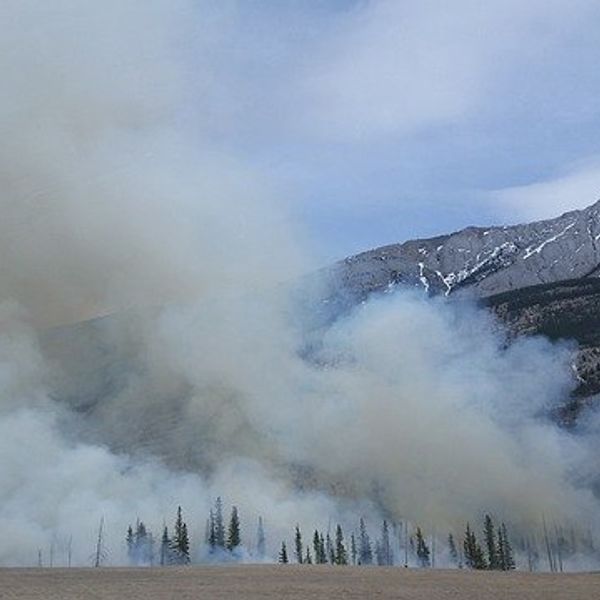
Particulate matter is released into the air when fossil fuels and other materials are burned. Two common sources are vehicle traffic – especially those that run on diesel fuel – and industrial combustion. Both are generally more concentrated in urban areas. Smoke and haze contain fine particles that are very small – less than 2.5 micrometers.
What did they do?
Researchers evaluated the effects of air particulates on patients diagnosed with lupus who were part of a clinical registery at the Lupus Clinic of the McGill University Health Center in Montreal, Quebec. The 237 patients – of which 223 were women – were examined every year between 2000 and 2007 for lupus symptoms and organ damage.
Various measures of disease activity were assessed through interviews, examinations and same-day blood and urine analyses. The tests detected the presence or absence in the blood of specific autoantibodies that act against the patient's own DNA. In the urine, the presence of specific proteins that signal kidney damage related to lupus were measured.
Levels of airborne particulate matter smaller than 2.5 micrometers (μm) (PM2.5) were measured hourly at seven fixed monitoring stations in Montreal. The readings were first averaged for each hour and then again for 24-hour blocks for up to 10 days before each patient's visit to the clinic. The numbers were assigned to the patients as their air pollution exposures.
Mean temperatures and ozone levels were calculated from data gathered from Environment Canada's Meteorological Centre.
The relationship between lupus symptoms and PM2.5 was evaluated statistically. Personal and environmental factors were taken into account during the data analysis. Ethnicity, education, age of disease onset, age at time of clinic visit, smoking history and use of medications to reduce inflammation were some of the personal factors considered. Ozone and temperature were controlled for in the analysis as both can impact PM2.5 levels. Ozone may also contribute to inflammation.
What did they find?
This study found that recent exposure to increased fine particulate levels in the air was associated with more lupus disease activity. Increased changes to both the antibodies against DNA and the kidney proteins in urine were linked to higher PM2.5 levels one and two days prior to the clinic visits. The same associations were not found when the PM2.5 levels for 10 days prior to clinic visit were used.
The results are based on a 10 micrograms per cubic meter (μg/m3) increase in airborne particles. The range for PM2.5 was 1.1 - 54.9 μg/m3 for the days of clinic visits. Yet, the PM2.5 levels measured usually fell below Canada's regulated level of 30 μg/m3.
The results show that when patients were exposed to elevated air pollution for two days prior to their visit to the clinic, they were 1.5 times more likely to have increased disease activity indicators for every 10 μg/m3 increase in PM2.5.
Higher exposures to small, airborne particles is associated with increased risk of lupus disease symptoms in those with the disease. Changes were seen after two days of the higher exposures, which generally fell within national health recommendations for the particulate pollution.
This is the first study to show a link between air pollution and lupus disease activity. It adds to the body of evidence that air pollution can have adverse effects on autoimmune diseases in general.
Although, these are interesting preliminary findings, the study design limits any further conclusions. For instance, the outdoor air pollution measures may not accurately reflect the true exposure for the individual patient. Indoor and outdoor PM2.5 levels can differ significantly. Also, participants were from one health care center. Researchers did not address the risk of developing lupus from PM2.5 exposure.
Future studies will be needed to more accurately reflect an individual's personal exposure to air pollution. Researchers could potentially use personal monitoring equipment to cooroborate and strengthen these initial findings.
In the end, the study suggests something positive for patients suffering from this chronic disease. In a similar way patients are advised to avoid sunlight to decrease skin rashes, those who suffer with lupus may want to consider reducing their exposure to air pollution in order to lower their risk for symptom flares.
ResourcesCooper, GS, J Wither, S Bernatsky, JO Claudio, A Clarke, JD Rioux, CaNIOS GenES Investigators and PR Fortin. 2010. Occupational and enironmental exposures and risk of systemic lupus erythematosus: silica, sunlight, solvents. Rheumatology 49 (11): 2172-2180. Kappos, AD, P Bruckmann, T Eikmann, N Englert, U Heinrich, P Hoppe, E Koch, GH Krause, WG Kreyling, K Rauchfuss, P Rombout, V Schulz-Klemp, WR Thiel and HE Wichmann. 2004. Health effects of particles in ambient air. International Journal of Hygiene and Environmental Health 207(4): 339-407. Leonardi, GS, D Houthuijs, PA Steerenberg, T Fletcher, B Armstrong, T Antova, I Lochman, A Lochmanova, P Rudnai, E Erdei, J Musial, B Jazwiec-Kanyion, EM Niciu, S Durbaca, E Fabianova, E Lebret, B Brunekreef and H van Loveren. 2000. Immune biomarkers in relation to exposure to particulate matter: a cross-sectional survey in 17 cities of central Europe. Inhalation Toxicology 12(11):1-14. Particulate matter. U.S. Environmental Protection Agency. Qian, Z, H-M Lin, WF Stewart, L Kong, F Xu, D Zhou, Z Zhu, L Shengwen, W Chen, N Shah, C Stetter and Q He. 2010. Seasonal pattern of the acute mortality effects of air pollution. Journal of the Air & Waste Management Association 60(4): 481-488. Shapira, Y, N Agmon-Levin and Y Shoenfeld. 2010. Geoepidemiology of autoimmune rheumatic diseases. Nature Reviews Rheumatology 6: 468-476. Understanding lupus. The Lupus Foundation of America. |
Particulates